 0

CatégorieCactus

GenreCleistocactus
FamilleCactaceae

Origine naturelleDél-Bolívia, Tarija megye, az Andok hegyvidéke. A faj természetes elterjedési központja Tarija környéke, ahol sziklás, száraz hegyoldalakon, jellemzően 1700–2600 méteres tengerszint feletti magasságban fordul elő.

Dans la collection depuis1 juin 2025
EmplacementBalkon

Habitat naturelSzáraz, félszáraz hegyvidéki környezet, köves lejtők és sziklás folyóvölgyek. A növény ásványi anyagokban gazdag, jó vízelvezetésű talajon fejlődik. Természetes élőhelyén erős napsütés, alacsony páratartalom és jelentős nappali–éjszakai hőmérséklet-ingadozás jellemző.
À propos de l’espèce
Cleistocactus strausii (Heese) Backeb.
- Aire de répartition naturelle
- Bolivie (Tarija)
Résumé d’entretien
Cleistocactus strausii
 EaufaibleLumièreplein soleilHumiditéfaiblegeneral genus dataTemp. minimale5 °C
Repos hivernal au sec · general genus dataDifficulté: ●○○○○ · general genus data✓ Non connue comme toxique · general genus data
No monthly schedule is shown because cultivar-/species-level data is not yet sufficient. The general values above are guidance only.
 Conseil de Cleistocactus : Its tubular flowers barely open – that is normal, they are hummingbird-pollinated.
⚠ Animaux et enfants · genre Cleistocactus
✓Non connue comme toxique 🐱 🐶 🧒détails →
Selon son cultivateur
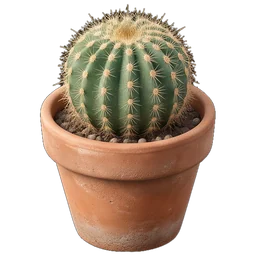
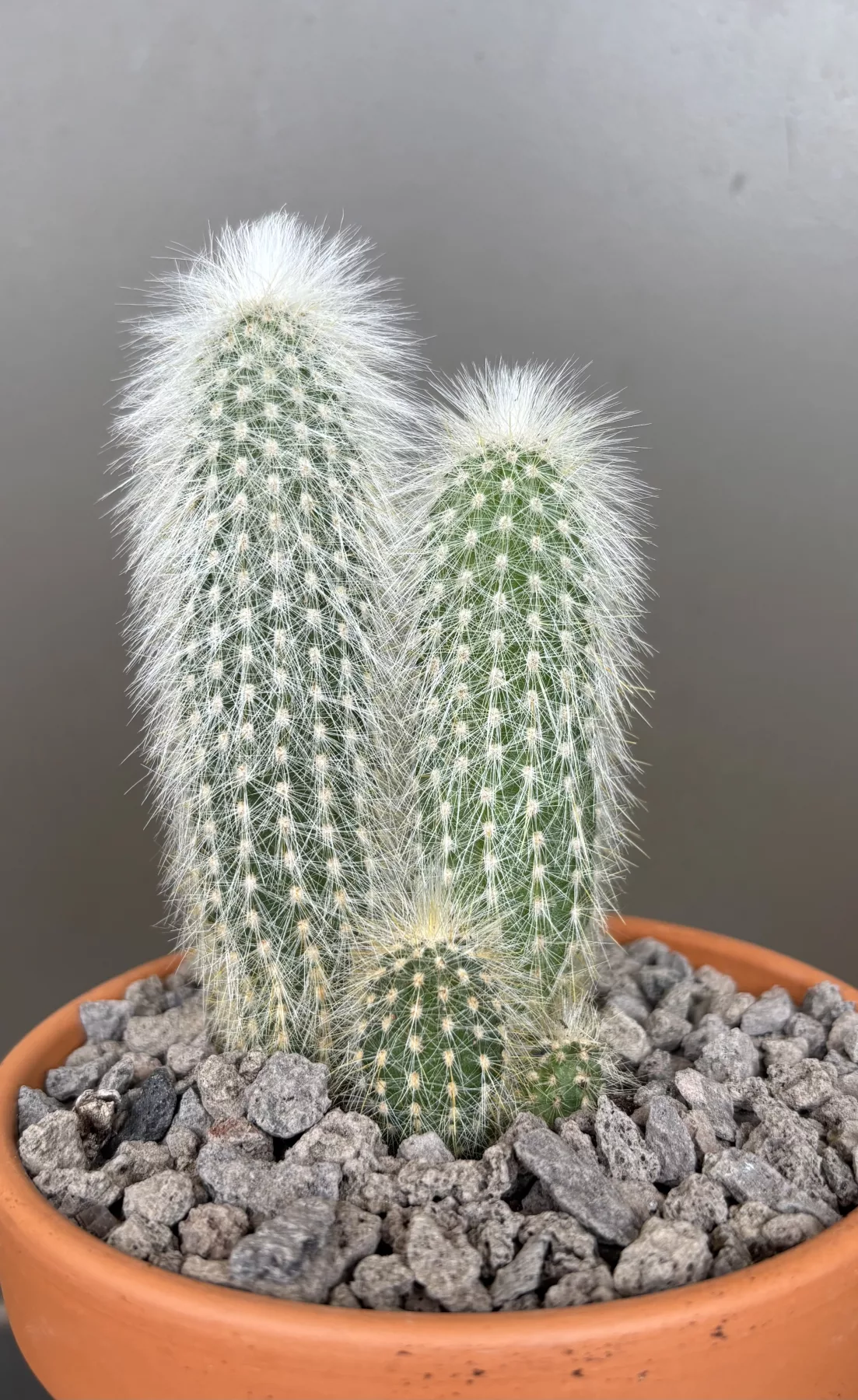
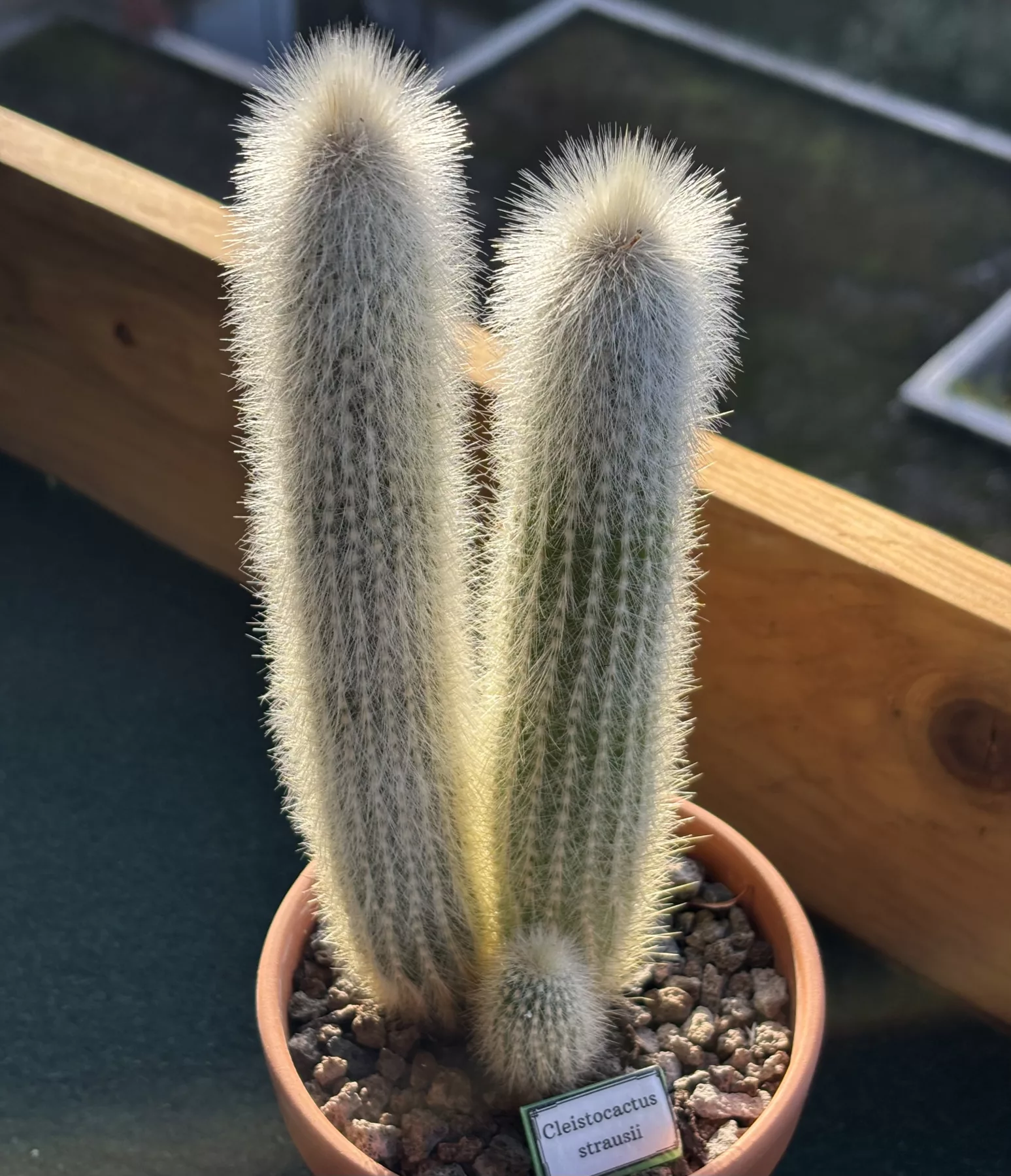
Cleistocactus strausii is a slender columnar cactus that produces basal offsets and can eventually form clusters several metres tall. Its light green stems are densely covered with silvery white, hair-like spines, giving the plant a soft, woolly appearance. The stems usually have around 25 ribs. Its elongated, tubular, wine-red flowers remain almost closed and project sideways from the stems. The species is characteristic of the dry mountain regions of southern Bolivia.
Par ordre chronologique
Photos de croissance
Outils magiques
Avant – après
482 jours d’écart · 2 photos
Conversation
Se connecter pour commenter.